
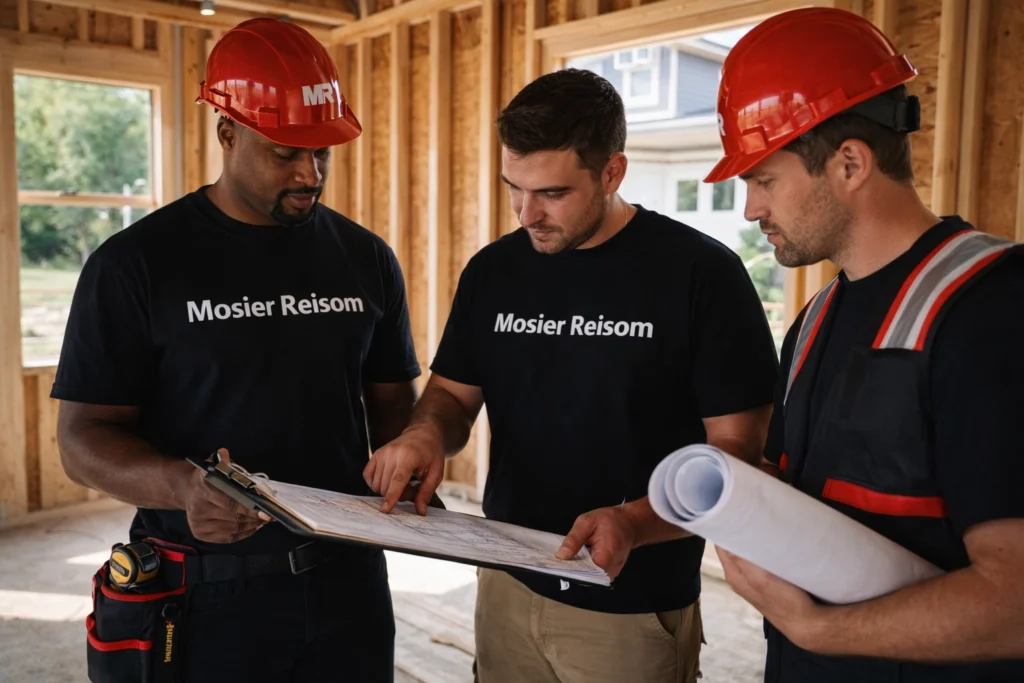
Building a custom home from the ground up is one of the most significant investments you'll make: and one of the most complex projects you'll manage. At Mosier Reisom Construction & Engineering, we've walked hundreds of clients through this exact process across Lawrenceville, Gwinnett County, and the greater Atlanta area. The difference between a smooth build and a nightmare filled with delays, cost overruns, and structural problems? Engineering precision, honest communication, and a roadmap you can actually follow.
This guide breaks down the new home construction process into clear phases: from dirt lot to front door key: so you know exactly what happens, when it happens, and what decisions you need to make along the way. Whether you're building on family land, a purchased lot, or working through land acquisition, understanding this roadmap protects your timeline, your budget, and your sanity.
Phase 1: Site Feasibility: Before You Break Ground
Most homeowners assume if they own a lot, they can build on it. That's not always true: and finding out mid-project that your site has drainage issues, utility access problems, or unsuitable soil is a budget disaster.
Site Analysis & Engineering Assessment
Before we sketch a single floor plan, our team conducts a comprehensive site evaluation. We're looking at:
- Topography and drainage patterns : Where does water flow during heavy rain? Will your foundation stay dry, or are we building in a natural drainage path?
- Soil composition and bearing capacity : Can the ground support a foundation, or do we need deep footings, caissons, or soil stabilization?
- Utility access and connection costs : How far are water, sewer, gas, and electric lines? Will you need a well, septic system, or costly utility extensions?
- Setback requirements and easements : Local zoning dictates how close you can build to property lines, roads, and neighboring structures.
- Environmental constraints : Wetlands, floodplains, protected trees, and steep slopes all affect design and permitting.

This isn't guesswork: it's engineering. We bring in surveyors, geotechnical specialists if needed, and coordinate with county planners early. Discovering a 20-foot utility easement cutting through your planned master bedroom before you pour concrete saves you tens of thousands of dollars and months of rework.
Realistic Feasibility Timeline: 2–4 Weeks
If your lot has clear access to utilities and straightforward topography, this phase moves quickly. If we're dealing with complicated drainage solutions, septic system permitting, or custom utility extensions, plan for the longer end of that range.
Phase 2: Engineering & Design Integration: Where It All Comes Together
Most builders hand you a pretty rendering and assume the details will work themselves out. That approach leads to change orders, structural issues, and "we didn't plan for that" conversations halfway through the build. At Mosier Reisom, engineering and design happen simultaneously: because a beautiful home that can't be built efficiently (or affordably) isn't a good design.
Integrated Design Process
Your architect or designer creates the vision: room layouts, exterior aesthetics, flow, and style. Our engineering team ensures that vision can be built structurally sound, code-compliant, and within budget. We're looking at:
- Load-bearing walls and structural spans : Can we achieve your open-concept great room without expensive steel beams? Where do support columns need to go?
- Roof design and complexity : Multiple roof lines, vaulted ceilings, and dormers add cost and time. We'll show you the trade-offs upfront.
- Foundation type and depth : Slab, crawl space, or full basement? Each has cost, drainage, and timeline implications.
- Mechanical systems routing : HVAC, plumbing, and electrical need logical pathways. Poor planning here leads to boxed-in ducts, awkward ceiling drops, and wasted space.

This is where value engineering happens: finding smarter, more efficient ways to achieve your goals without sacrificing quality. Want 12-foot ceilings in the great room? We'll show you how to do it without blowing the HVAC budget. Love that bay window? We'll engineer the cantilever properly so it doesn't leak in five years.
Design & Permitting Timeline: 6–10 Weeks
Custom designs take time, especially if you're iterating on layouts and finishes. Add another 2–4 weeks for permit reviews and approvals in Gwinnett County: longer if your project requires variances or design review board approval.
Phase 3: Foundations & Framing: The Bones of Your Home
Once permits are in hand, the visible work begins. This phase is where your investment turns into something you can walk through: and where precision in the planning stages pays off.
Foundation Work (3–5 Weeks)
We start with site preparation: clearing, grading, and installing erosion control measures. Then comes the foundation itself:
- Excavation and formwork : Digging to the correct depth, installing rebar grids, and building forms for concrete pours.
- Moisture barriers and drainage : Vapor barriers under slabs, foundation waterproofing, and perimeter drainage systems protect your investment from water intrusion.
- Concrete placement and curing : We pour in optimal weather conditions and allow proper curing time: rushing this step leads to cracks and structural problems.

Framing (4–6 Weeks)
This is when your home takes shape. Our framing crews install:
- Floor systems : Joists, subfloor, and structural supports.
- Exterior walls and interior partitions : Load-bearing walls, window and door openings, and room layouts.
- Roof structure : Trusses or rafters, sheathing, and initial weatherproofing.

Engineering precision matters here. Improperly sized beams, incorrect joist spacing, or skipped structural connectors create long-term problems: sagging floors, cracked drywall, and doors that won't close. Our crews follow engineered plans to the inch, and we document everything for inspections.
Pro Tip: This is the phase where homeowners often want to make changes: moving a window, adding an outlet, changing a door swing. Small changes now are manageable. Changes after drywall goes up? Expensive and time-consuming.
Phase 4: Systems & Rough-In: The Infrastructure You Don't See
Once framing passes inspection, the mechanical, electrical, and plumbing (MEP) trades take over. This work happens inside walls and ceilings: which is why planning it correctly during design is critical.
Rough-In Work (4–6 Weeks)
- Plumbing rough-in : Water supply lines, drain and vent pipes, and fixture locations.
- Electrical rough-in : Wiring for outlets, switches, lighting, and panels. Smart home pre-wiring happens here if you're planning for it.
- HVAC installation : Ductwork, equipment placement, and zoning systems.
- Insulation : Spray foam, batt insulation, or blown-in cellulose: proper installation affects energy efficiency and comfort for the life of the home.
Each trade coordinates with the others to avoid conflicts: plumbing pipes don't intersect with HVAC ducts, electrical boxes don't land on studs, and access panels are placed where they're actually accessible. This is project management in action.
County inspectors review rough-in work before we close up walls. Any deficiencies get corrected now: not after drywall is installed.
Phase 5: Finishes & Closing: Making It Yours
The final phase transforms a weathertight shell into a move-in-ready home. This is where your design choices: tile, flooring, paint colors, fixtures, cabinetry: come to life.
Interior & Exterior Finishes (8–12 Weeks)
- Drywall installation and finishing : Hanging, taping, mudding, and sanding for smooth walls and ceilings.
- Interior painting : Primer and finish coats in your selected colors.
- Flooring installation : Hardwood, tile, luxury vinyl plank, or carpet.
- Cabinetry and countertops : Kitchen and bath installations, including trim and hardware.
- Trim and millwork : Baseboards, door casings, crown molding, and built-ins.
- Exterior finishes : Siding, brick, stone, soffit, fascia, and final roof installation.

Final Systems & Fixtures (2–3 Weeks)
- Finish plumbing and electrical : Installing faucets, light fixtures, outlets, and switches.
- HVAC startup and balancing : Testing systems and adjusting airflow for even temperatures.
- Appliance installation : Coordinating delivery and hookup for kitchen and laundry equipment.
Inspections & Closeout (1–2 Weeks)
Final building inspections, certificate of occupancy, utility activation, and your final walkthrough. We create a punch list of any remaining items and address them before you move in.
Real Expectations: Timeline & Budget
Based on current conditions in the Atlanta metro area, here's what to expect:
Total Construction Timeline: 8–14 Months
- Pre-construction and design: 2–3 months
- Foundation and framing: 2–3 months
- Rough-in and systems: 1.5–2 months
- Finishes and closeout: 2.5–4 months
Weather, permit delays, material availability, and custom selections all affect this timeline. The more custom your home, the longer the process: but the result is worth it.
What Slows Projects Down:
- Late finish selections (tile, flooring, fixtures)
- Scope changes mid-construction
- Permitting delays or required re-submittals
- Unforeseen site conditions (rock, poor soil, underground utilities)
- Material backorders for specialty items
What Keeps Projects On Track:
- Clear, engineered plans before construction starts
- Realistic budgets with contingency allowances
- Proactive communication and decision-making
- Experienced project management and trade coordination
Why Engineering Matters: Even for "Simple" Homes
You might be thinking, "This is a lot of detail for a house." That's the point. A well-engineered home doesn't cost more: it costs right. You're not paying for change orders to fix structural issues, rework to meet code, or emergency repairs when the first heavy rain reveals drainage problems.
At Mosier Reisom Construction & Engineering, we bring a systems-thinking approach to every build. Our team includes licensed engineers, experienced project managers, and skilled tradespeople who've built hundreds of homes across Georgia. We don't guess: we calculate, plan, and execute with precision.
Ready to Build Your Custom Home?
If you're serious about building in Lawrenceville, Gwinnett County, or the surrounding Atlanta area, let's start with an honest conversation about your lot, your vision, and what's actually achievable within your timeline and budget.
Call us at 770-274-4277 to schedule your pre-construction consultation. We'll walk your property, review your plans (if you have them), and give you a realistic roadmap: no sales pitch, just straight answers from people who've done this hundreds of times.
Your custom home deserves more than guesswork. It deserves engineering, planning, and a team that shows up every day with your logo on the truck and your project as the priority. Let's build it right the first time.