
If you're planning a bathroom remodel in an older Atlanta-area home, there's something you need to understand before you start picking out tile: most bathroom problems aren't on the surface. They're hidden behind walls, under your floor, and inside your plumbing system, and if your contractor isn't looking for them, you're about to spend good money covering up rot, mold risk, and failing infrastructure.
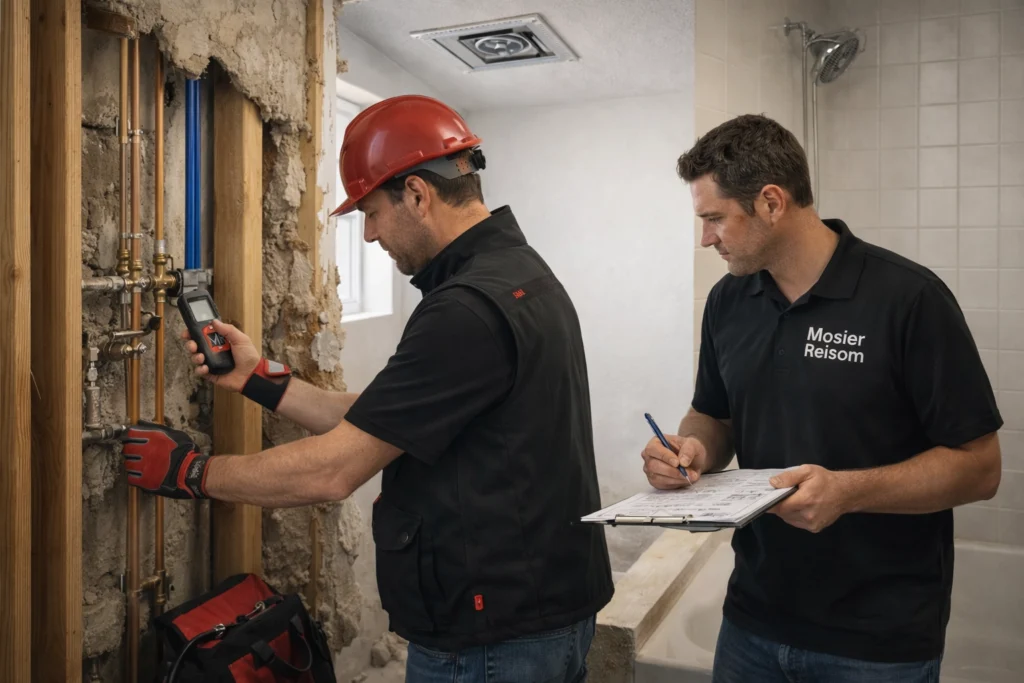
Here's the reality we see almost weekly at Mosier Reisom Construction & Engineering: a homeowner wants to "just refresh" their bathroom with new fixtures and tile, but once we start the demo process, we find subfloor rot, inadequate venting, galvanized pipes that are rusted from the inside, and zero waterproofing. At that point, the only responsible path forward is gutting the space to the studs and rebuilding it correctly, with proper moisture barriers, modern plumbing, ventilation that actually works, and a subfloor that won't flex and crack your new tile in two years.
This isn't upselling. It's engineering. And if you're going to invest in a bathroom remodel, you deserve to know what red flags to look for, and why cutting corners now means paying twice later.
1. Subfloor Rot: The Hidden Structural Problem
Your bathroom subfloor is the foundation everything else sits on, tile, fixtures, cabinets, the whole build. In older homes across Gwinnett County and the Atlanta metro, subfloor damage is one of the most common (and most expensive) surprises we uncover during bathroom remodels.
What causes it: Decades of moisture intrusion. A slow toilet leak. Poor waterproofing around the tub. Grout that cracked five years ago and let water seep through. Even high humidity from inadequate ventilation can rot wood subflooring over time. Once the damage starts, it spreads, because wet wood is an invitation for mold and structural decay.
How to spot it before demo:
- Soft or spongy flooring near the toilet, shower, or tub, if the floor flexes when you walk on it, that's a warning sign
- Cracked or loose tiles that weren't installed poorly but are failing because the subfloor underneath is compromised
- Staining or warping on the ceiling below the bathroom (if you have a basement or lower floor)
- Musty odors that don't go away even after deep cleaning
Here's the problem with subfloor rot: you can't fix it with a patch. If the plywood or OSB subfloor is compromised, it has to be removed and replaced. And if you try to tile over a weak subfloor, or worse, tile over existing tile to "save money", you're just adding weight to a failing structure. Those new tiles will crack within months.

The only fix: Remove the damaged subfloor, inspect the framing and joists underneath (sometimes rot extends into the structure itself), replace with new plywood, and then build your waterproofing system on a solid, level base. It's not optional if you want the remodel to last.
2. Inadequate Venting: The Mold Accelerator
Bathrooms generate a massive amount of moisture, showers, baths, sinks, even just breathing in a small enclosed space. If that moisture doesn't have a way out, it condenses on walls, ceilings, and inside your framing. Over time, that leads to mold growth, peeling paint, rotting drywall, and wood framing damage.
The venting problems we see in older Atlanta homes:
- No exhaust fan at all, some older bathrooms were built with just a window, which doesn't remove moisture efficiently (especially in Georgia's humidity)
- Undersized or low-quality fans that don't move enough air (CFM rating too low for the square footage)
- Fans that vent into the attic instead of outside, this just moves the moisture problem to your attic, where it condenses on insulation and roof decking
- Fans installed incorrectly, blocked ducts, poor placement, or fans that homeowners never run because they're too loud
Here's the baseline: your bathroom needs a properly sized exhaust fan (minimum 50 CFM for most bathrooms, higher for larger spaces) that vents directly to the exterior through insulated, sealed ductwork. Anything less is a mold risk waiting to happen.
Why this matters during a remodel: If you're investing in new tile, a modern vanity, and updated fixtures, but your contractor isn't addressing ventilation, you're setting up the new bathroom to fail. Mold doesn't care how expensive your tile was, it's going to grow behind it if moisture has nowhere to go.
We install high-quality, quiet exhaust fans on every bathroom remodel, vent them properly to the outside, and size them correctly for the space. It's a small upfront cost that prevents thousands in future mold remediation and structural repair.
3. Galvanized Plumbing: The Ticking Time Bomb
If your home was built before the 1960s, and many in the Lawrenceville and Gwinnett area were, there's a decent chance you still have galvanized steel plumbing. These pipes corrode from the inside out over time, restricting water flow, creating pressure problems, and eventually failing altogether.
The red flags:
- Low water pressure in the bathroom (especially if other areas of the house have better flow)
- Discolored water when you first turn on the tap, rust-colored or brownish tint
- Visible corrosion on exposed pipes in the basement or crawl space
- Frequent leaks or repairs in the plumbing system
Here's the engineering reality: galvanized pipes have a lifespan of 40–70 years. If your home is older, those pipes are at or past their service life. And when you remodel a bathroom, you're opening up the walls anyway, so it's the most cost-effective time to replace old plumbing with modern PEX or copper.
Why this isn't optional: If you install a beautiful new bathroom with updated fixtures and fresh tile, but leave 60-year-old corroded pipes behind the walls, you're going to have leaks. And when those leaks happen, they cause water damage to your brand-new finishes. Then you're paying for demo and repairs all over again, except this time, you're also ripping out work that's only a few years old.
When we gut a bathroom to the studs, we inspect all the plumbing. If it's galvanized or outdated, we replace it. If it's copper or PEX in good condition, we integrate it properly into the new build. The goal is a system that's going to work reliably for the next 30+ years.

4. Waterproofing Systems: The Engineering Solution (Schluter/Kerdi)
Here's a fact that shocks most homeowners: tile and grout are not waterproof. Water penetrates grout joints and eventually works its way through tile, especially in wet areas like showers and tub surrounds. If there's no waterproofing membrane behind the tile, that water is going directly into your drywall, subfloor, and framing.
This is where modern waterproofing systems, like Schluter or Kerdi membranes, make all the difference. These systems create a continuous, bonded waterproof layer that protects the structure even if water gets through the tile surface.
What a complete waterproofing system includes:
- Waterproof membranes on all wet-area walls, not just paint-on products, but bonded sheet membranes that seal the substrate
- Sealed seams and corners using manufacturer-approved tapes and caulks, every joint is a potential leak point
- Waterproofed niches and curbs, preformed niche systems and curb protection that integrate into the membrane
- Properly sloped shower bases with integrated waterproof pans, water needs a path to the drain, not a path into your floor joists
When we rebuild a bathroom, we use Schluter systems because they're engineered, tested, and warrantied. The tile goes on top of a waterproof foundation, so even if grout cracks or needs maintenance years down the road, the structure underneath is protected.
Why "just tile over it" doesn't work: We regularly see bathrooms where a previous contractor tiled directly over drywall or green board with no membrane. It looks fine for 2–3 years, then the homeowner starts seeing staining, soft spots, or mold. At that point, the only fix is to rip it all out and start over, correctly.
Why Gutting to the Studs Is Often the Only Responsible Path
Look, we get it, nobody wants to hear that their "cosmetic refresh" is going to turn into a full gut job. But here's the truth: if your Atlanta-area home is 30+ years old and the bathroom has never been properly renovated, the odds are high that there are structural, plumbing, or moisture problems behind those walls.
When we open up a bathroom during demo, we're looking at:
- The condition of the framing and subfloor
- The state of the plumbing (is it original galvanized, or has it been updated?)
- Whether there's any waterproofing at all, or if tile was just slapped on drywall
- The venting setup, does it exist, and does it actually work?
If the answer to most of those questions is "not good," then the responsible move is to gut the space to the studs, address the structural and systems issues, and rebuild it with modern materials and proper waterproofing. Yes, it costs more upfront. But it also means you're not redoing the same bathroom in five years because hidden problems came back to haunt you.
The Bottom Line: Honest Assessments, Engineered Solutions
At Mosier Reisom Construction & Engineering, we don't hide problems to keep bids low. We assess bathrooms with an engineering mindset: looking for structural integrity, moisture risk, plumbing condition, and whether the existing systems can actually support a long-lasting remodel. If we find subfloor rot, inadequate venting, failing plumbing, or missing waterproofing, we're going to tell you.
Because you deserve a bathroom that's going to work reliably for the next 20–30 years: not one that's going to start leaking, growing mold, or cracking tile the moment the warranty runs out.
Ready for an honest assessment of your bathroom? Call us at 770-274-4277 to schedule an on-site inspection. We'll walk through your space, identify any red flags, and give you a clear picture of what it's going to take to do the job right: the first time.