
You've probably heard the advice: hire an architect to design your dream home or remodel, then find a contractor to build it. On paper, it sounds logical: specialists for each phase, more control, better design. In practice? It's where most homeowner headaches, budget overruns, and project delays come from.
At Mosier Reisom Construction & Engineering, we've watched this scenario play out dozens of times: a homeowner walks in with beautiful architectural plans, a firm budget in mind, and a timeline they've already committed to. Then reality hits. The contractor prices the design at 30% over budget. The architect blames "unrealistic expectations." The contractor points to "impractical details." And the homeowner? They're stuck in the middle, wondering why no one told them upfront that the soaring ceiling they loved would require custom steel beams that weren't in the original estimate.
This isn't a flaw in the people involved: it's a flaw in the process. When you separate design and construction into two contracts, two teams, and two timelines, you create gaps. And those gaps cost you time, money, and peace of mind.
Here's why the design-build approach: where one team handles both design and construction under a single contract: eliminates those problems and delivers projects that actually get built on budget, on schedule, and without the finger-pointing.
The "Finger Pointing" Gap: When No One Owns the Problem
The most predictable disaster in traditional design-bid-build projects happens when something doesn't work. The architect designed a stunning kitchen layout with a 10-foot island and a wall of floor-to-ceiling cabinets. It looks incredible in the renderings. Then the contractor opens the walls and discovers the plumbing stack is exactly where that island needs to go. Moving it? That's a $6,000 change order.
Who's responsible? The architect says, "I designed what the client asked for: the contractor should have flagged this during the estimate." The contractor says, "I priced what was on the plans: the architect should have verified existing conditions." The homeowner says, "I just wanted a nice kitchen."

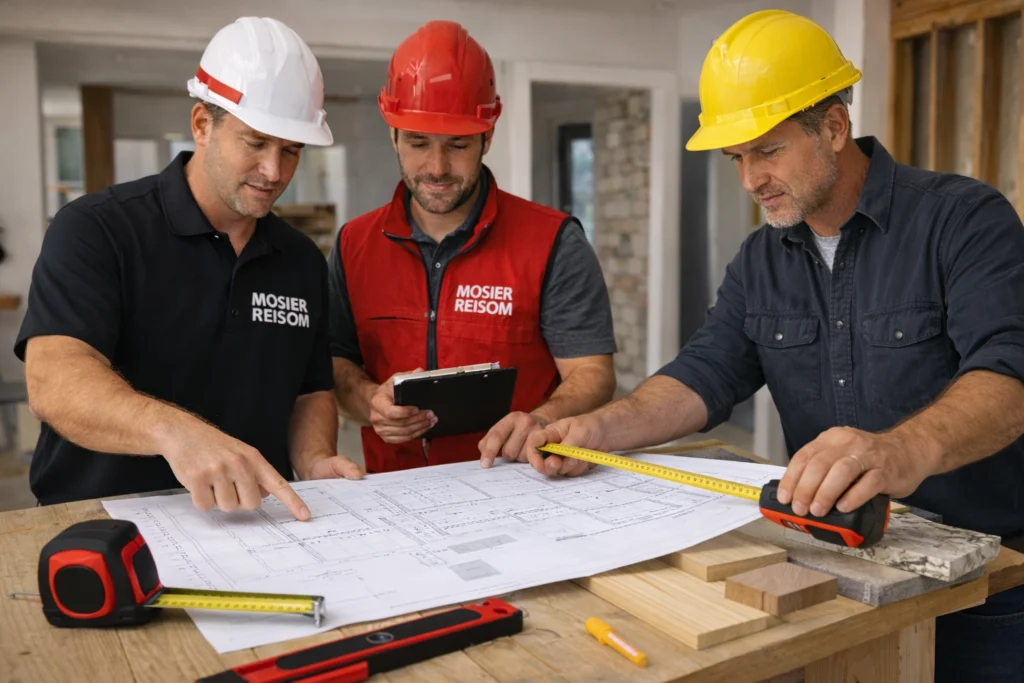
In a design-build model, this problem doesn't escalate into a blame game because the same team that designed the kitchen is the same team building it. Our designers and project managers walk the site together during the design phase. We open walls, verify plumbing locations, and check structural constraints before we finalize drawings. If we find a conflict, we solve it at the design table: not after demo day when you're living without a kitchen and the clock is ticking.
This isn't just about avoiding arguments. It's about accountability. With one contract and one team, there's no gray area about who fixes problems. We do. Fast.
Why Architects Don't Always Know Current Labor Costs (And Why That Matters)
Architects are brilliant at design. They understand proportion, light, flow, and aesthetics. What many don't track: because it's not their job: is the current cost of labor, the lead time on specialty materials, or how long it takes to get a permit approved in Gwinnett County in 2026.
We've seen plans specifying European tilework that has a 16-week lead time. Custom windows with delivery schedules that blow the timeline. Structural details that require engineering drawings the architect didn't account for. These aren't mistakes: they're just realities that architects working in a vacuum don't always factor in.
In a design-build process, the people pricing and building your project are sitting at the table during design. When our designer suggests a vaulted ceiling, our project manager is right there saying, "Here's what that does to framing costs and schedule." When you fall in love with a specific countertop, we check availability and lead time before we lock it into the plan.
This real-time collaboration means fewer surprises. The budget we give you after design? It reflects actual costs, not theoretical ones. The timeline? It's based on permit realities and crew availability, not best-case scenarios.
The Efficiency of a Single Point of Responsibility
Here's a question most homeowners don't think to ask until it's too late: Who's coordinating your project?
In a traditional setup, the architect finishes drawings and hands them off. The contractor receives them, prices them, and (hopefully) starts asking clarifying questions. Those questions go back to the architect, who may take days or weeks to respond because they've moved on to other projects. Meanwhile, you: the homeowner: are often the one relaying messages, scheduling meetings, and trying to keep everyone aligned.
You become the project manager by default. And unless you've built homes before, that's not a role you want.

Design-build flips this. You have one point of contact. One team managing design, engineering, pricing, permits, ordering, and construction. When you call with a question, you're not bounced between the architect's office and the contractor's scheduler. You're talking to the team that owns the entire project.
This structure also speeds up decision-making. Need to adjust the deck layout because of a drainage issue? We make that call in the field with full knowledge of design intent, structural requirements, and budget impact. No waiting for an architect to redraw plans or a contractor to re-bid. We adjust, document, and move forward.
Research backs this up: design-build projects are completed faster and typically 6% less expensive than traditional contracting, largely because of eliminated delays and reduced rework.
Engineering-Led Precision: Why Structure Matters as Much as Style
Here's where Mosier Reisom's approach differs even from other design-build firms: we lead with engineering.
Most design-build companies start with aesthetics and figure out structure later. We do the opposite. Before we finalize any design, we're thinking about load paths, drainage, foundation requirements, and long-term durability. This engineering-first mindset isn't about making things boring: it's about making sure your beautiful design actually stands up to Georgia weather, soil conditions, and building codes for the next 20 years.
Take decks, for example. We've torn out and rebuilt dozens of decks that "looked great" but failed because the ledger wasn't flashed correctly, the footings weren't deep enough, or the joist spacing didn't account for composite decking deflection. Pretty design doesn't matter if the structure fails.
When engineering is integrated from day one, you get precision in the details that matter:
- Structural calculations built into design, not bolted on later
- Waterproofing and flashing designed as systems, not afterthoughts
- Code compliance verified before construction starts, not during inspections
- Long-term performance prioritized alongside aesthetics
This is especially critical in remodels, where we're often working with existing structures that have hidden issues. Our engineering background means we can assess conditions, design solutions, and execute them without costly delays or change orders when we open walls and find surprises.
What This Means for Your Project (And Your Budget)
If you're reading this and thinking, "This sounds great, but does it cost more upfront?": fair question. Design-build firms sometimes charge a bit more at the beginning because you're paying for integrated planning and coordination from day one. But here's what you're actually buying:
- Fewer change orders because design accounts for constructability
- Faster timelines because phases overlap instead of running sequentially
- Transparent budgets because the people pricing know what things actually cost
- One throat to choke (as they say in the industry) when problems arise
Most importantly, you're buying certainty. You're not gambling that the architect's design will magically fit your budget when it gets priced. You're not hoping the contractor and designer will play nice when conflicts arise. You know the cost, the timeline, and who's accountable before you break ground.
For homeowners in Lawrenceville, Gwinnett County, and the surrounding Atlanta metro, this approach makes even more sense because local permit processes, inspection timelines, and material availability require someone who knows the territory. We've built hundreds of projects in this area. We know which details trigger plan review delays. We know realistic timelines for county inspections. We know which suppliers deliver on time and which ones require constant follow-up.
When Design-Build Doesn't Make Sense
To be completely transparent: design-build isn't the right fit for every project. If you're looking for an ultra-custom architectural statement home where design exploration is the priority and budget is secondary, hiring a standalone architect might give you more design freedom upfront. If you want to competitively bid your project to five different contractors and choose purely on price, a traditional process gives you that option.
But if you're a homeowner who wants:
- A realistic budget that holds
- A timeline that doesn't stretch indefinitely
- One team accountable for results
- Engineering precision that ensures longevity
…then design-build is how you get there. And if you want a team that leads with engineering, thinks in systems, and delivers projects that perform as well as they look, that's where Mosier Reisom's approach stands apart.
Start Your Design-Build Journey the Right Way
We're not going to promise you a project with zero challenges: construction always has surprises. But we will promise you a team that solves problems instead of creating them, a process designed to eliminate the most common delays and cost overruns, and a final result that's built to last.
If you're planning a remodel, addition, new home, or deck project in the Lawrenceville area and want to understand what your project will actually cost and how long it will really take, let's talk through it.
Call us at 770-274-4277 to schedule a Budget + Schedule Reality Check. We'll walk your site, talk through your goals, and give you a straight answer about what's possible, what it costs, and how we'd approach it as a design-build team.
No finger-pointing. No surprises. Just one team, one plan, and one commitment to getting it right.